
Sometimes sciatica eases on its own. For many people it doesn't, and anti-inflammatories, heat and stretching only go so far. That's often when people come to us.
How Chinese medicine sees it
Sciatica is often linked to a bulging or herniated disc, bone spurs or narrowing in the spine. It can also come from a tight piriformis muscle deep in the buttock pressing on the nerve. Chinese medicine sees the pain as a blockage of qi and blood along the pathway where you feel it.
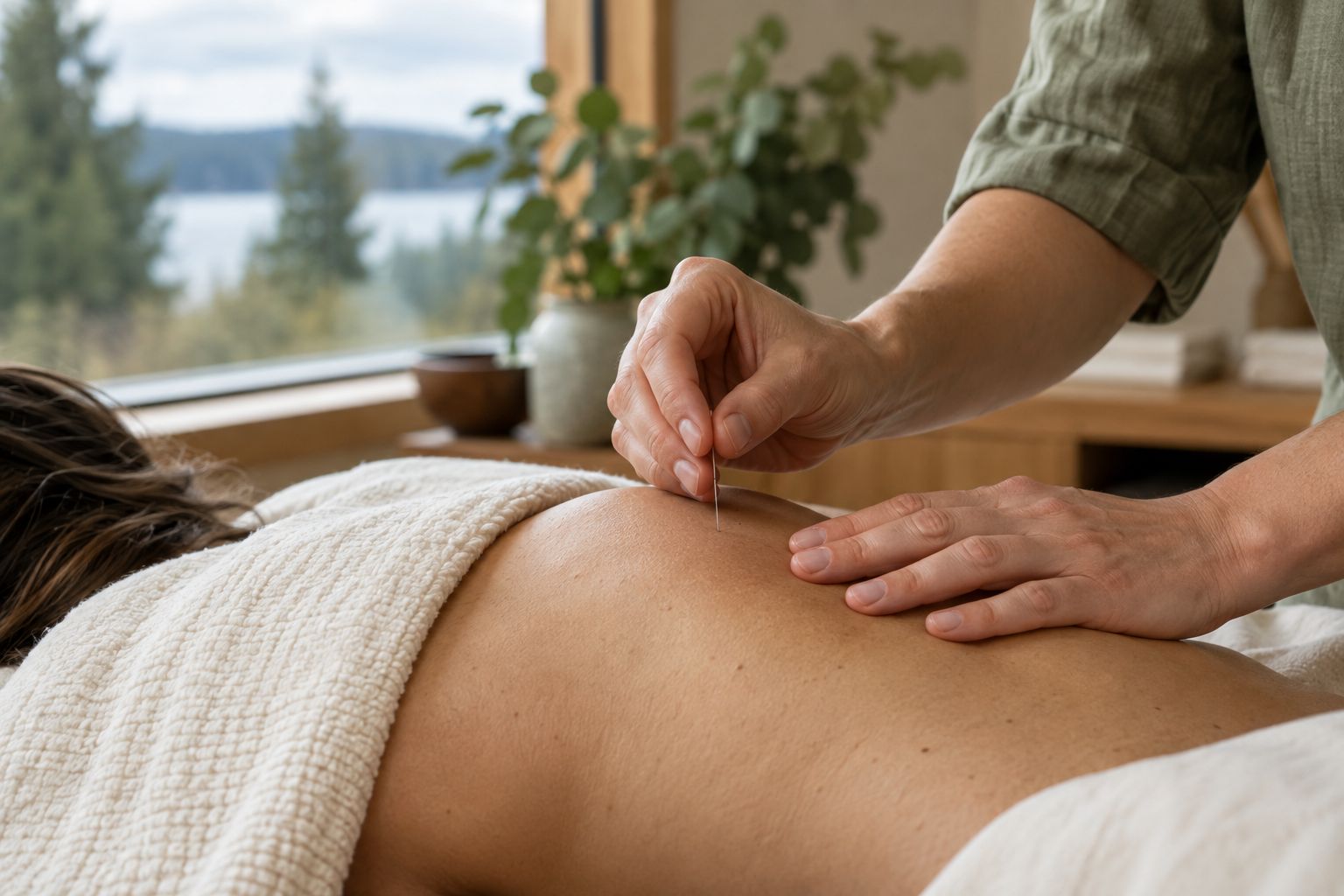
Acupuncture aims to calm pain signals and support the body's own pain-relief system. It also aims to improve circulation around the irritated nerve and tight muscles.
How we treat it
- Acupuncture along the low back, hip and leg, plus distant points chosen for your pattern.
- Electroacupuncture (gentle electrical stimulation) where it suits your case.
- Heat therapy and bodywork to relax the deep hip and buttock muscles.
- Custom herbal formulas prescribed by Scott Paglia, L.Ac.
- Stretches and exercises to take home between visits.
What to expect
- A relaxed consultation and a full health history. We'll ask about where the pain travels, how long you've had it and what sets it off, and about your sleep, digestion, energy and stress too.
- A traditional Chinese medicine exam, including your pulse and your tongue.
- A clear explanation of what we found and how Chinese medicine understands it.
- A treatment plan made for you, with time for all your questions.
- We'll recommend a plan after your first appointment, and adjust it as we see how you respond.
Please keep working with your physician, especially if you notice numbness, weakness or changes in bladder or bowel control, which need prompt medical attention.
Common questions
How do I know if it's sciatica or a tight muscle?
Both can feel alike. A tight piriformis muscle can press on the sciatic nerve and mimic a disc problem. Your exam and history help us tell the difference and treat the right area.
Will you give me anything to do at home?
Yes. Most people leave with a few simple stretches or exercises to support their treatment.